Two Rulebooks, One Bay
Kealakekua Bay holds 315 acres of Marine Life Conservation District tucked inside roughly 375 acres of State Historical Park. Two designations, two rulebooks, one very small stretch of coastline where both apply at once. Say it “kay-ah-lah-KAY-koo-ah” and you’ll get a smile at the rental desk before you’ve even signed anything.
I’ve been swimming this bay since 2016, and the thing I keep noticing is how ordinary most of the rules are. Don’t stand on coral. Don’t chase dolphins. Carry your rubbish back up the hill. That’s the bulk of it. The remaining detail is where visitors get caught out, so here’s the briefing I’d give a friend in the car park, in roughly the order you’ll need it.
The clarity is no accident, by the way. On a flat morning, horizontal visibility pushes past 100 feet, which is a bit like looking through gin. That exists because the district was protected in 1969 and because several generations of visitors kept their hands to themselves. Hawaiian kapu carried the same idea long before DLNR did, and there’s more on that lineage over on the Captain Cook and Hawaiian history page. The reef itself gets the deep treatment under snorkelling at Kealakekua Bay.
The Basics Before You Set Off
Gates open at 7:00 AM and shut at 8:00 PM daily. No overnight anything, no exceptions. Admission costs $0.00 (€0.00) for residents and non-residents alike, which surprises people who’ve just paid $30 to park at a beach somewhere else on the island. No lifeguards are stationed at Kaʻawaloa Flats or at Nāpōʻopoʻo Beach. None at all, and that absence is the single most important fact on this page.
| Item | Detail | What it means for you |
|---|---|---|
| Park hours | 7:00 AM – 8:00 PM daily | Gates close at 8:00 PM sharp; the shoreline goes pitch-black after dusk |
| Admission | $0.00 (€0.00), residents and non-residents | Nothing to book, nothing to pay at the entrance |
| Lifeguards | None at Kaʻawaloa Flats or Nāpōʻopoʻo Beach | You are the safety plan; swim with a buddy or don’t swim |
| Facilities at Nāpōʻopoʻo | Restrooms, outdoor rinse showers, covered pavilion | The only infrastructure in the park |
| Facilities at Kaʻawaloa Flats | None: no water, no bins, no toilets | Pack 2.5 to 3 litres per person and pack everything out |
| Water access | Basalt boulders, no sand, no ADA water ramp | Reef shoes, not flip-flops |
Reef Law: Hands Off, Fins Off, Nothing Leaves
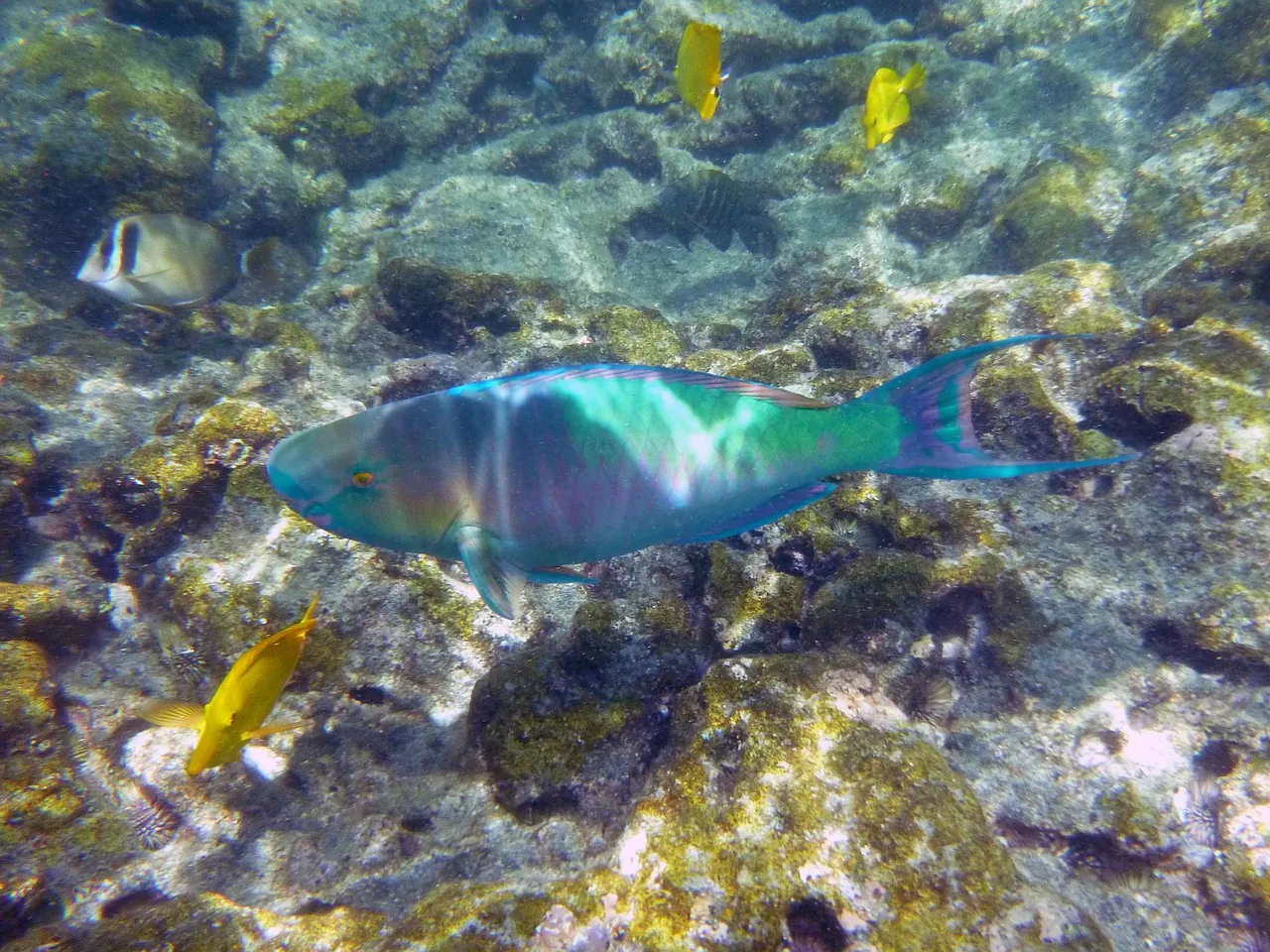
Touch nothing. That covers coral, rock, sand, shells, urchins and the tempting little cowrie you spotted in a fissure. Standing on coral kills polyps that took decades to build, and one careless fin kick can snap a lobe of cauliflower coral that a dozen fish were using as cover. Feeding anything rewrites fish behaviour and fuels algae growth, which is exactly why it’s banned outright rather than gently discouraged.
In the water
- Float, don’t stand. Buoyancy is the skill nobody practises, and drifting into the reef is the most common accident I see here.
- Keep fins horizontal and give coral an arm’s length of clearance at all times.
- Never feed fish, and never hold food underwater for a photograph.
- No gloves, no spears, no collecting bags, no fishing gear anywhere inside the district.
- If marine life approaches you, hold still and let it pass. Don’t reach out.
On the rocks and shore
- Nothing leaves the bay. No shells, no sand, no lava rock, no urchin tests in a pocket.
- Stay off the coral shelf near the jetty; it looks like stone, and it is alive.
- Report injured turtles, entangled wildlife or damaged reef to a crew or ranger.
- Never pull a turtle onto a boat for a photo, and never handle a resting animal at all.
- Take every scrap of rubbish up the trail with you, including fruit peel and hair ties.
The jetty at Kaʻawaloa is the awkward bit. Concrete steps drop into about four feet of water over a basalt shelf, and at low tide you’ll see urchins sitting in every crack. Enter feet first with your palms flat on the step behind you, then push out over the shelf before you put your face down. Don’t walk, and don’t stand to adjust your mask. There is nothing down there worth losing a heel for.
The reef doesn’t need you to be a brilliant swimmer. It needs your hands in your pockets and your fins off the coral. Everything else is negotiable, honestly.
The Sunscreen You Must Not Bring
Hawaiʻi’s Act 104 banned the sale of sunscreens containing oxybenzone and octinoxate from 2021, and most Kealakekua operators have gone further by pushing octocrylene off their boats too. This isn’t marketing. Those compounds damage coral larvae at concentrations you’d genuinely find in a busy cove by mid-morning. The Hawaiʻi Department of Health publishes the detail if you want it.
Buy mineral-only formulas with non-nano zinc oxide or titanium dioxide as the active ingredient. Read the back of the tube, not the cheerful front. If the list includes oxybenzone, benzophenone-3, octinoxate or octocrylene, leave it in the hire car. The cheapest route to compliance, and the one I take, is a long-sleeve UPF 50+ rashguard and a wide-brim hat, with sunscreen only on the bits that actually see sun.
Crews inspect bags at harbour check-in. I’ve watched a woman have a nearly new bottle confiscated at the dock at Keauhou, and she took it well, but she wasn’t thrilled. Bring the right stuff and nobody blinks at you all day.
Spinner Dolphins and the 50-Yard Rule
Hawaiian spinner dolphins rest in this bay in the mornings, which is why the approach rules here are tighter than anywhere else along the Kona coast. Federal regulation 50 CFR §223.214 sets a 50-yard (150-foot) limit for vessels and for people in the water. Mothers nurse calves in the shallows between roughly 7:00 and 10:00 AM, and a pod interrupted repeatedly loses its rest window for the entire day. NOAA Fisheries tracks the science behind that.
If dolphins turn up while you’re snorkelling, stop, hold your position or hold your craft, and let them come to you. Do not swim toward them, ahead of them or alongside them, and never cut a pod off from open water. Penalties for harassment can clear $10,000, and DOCARE officers do enforce it from the water rather than from a desk. Reading the bay’s wildlife is covered in more depth on the snorkel hub.
Sea Turtles, Monk Seals and Everything Else
Honu, the green sea turtles, graze the reef shelf and surface to breathe every few minutes. Never ride one, never touch the shell, and never park yourself on a surfacing route. Two metres of distance is polite, keeps you clear of a flipper swipe, and keeps you legal.
| Species | Minimum distance | What not to do |
|---|---|---|
| Honu (green sea turtle) | ~2 m / 6 ft in the water | No touching, no riding, no blocking the surface route |
| Spinner dolphin | 50 yd / 150 ft (federal) | No pursuit, no intercepting, no surrounding a pod |
| Hawaiian monk seal | ~45 m / 150 ft on land | No crowding between animal and sea; report sightings to NOAA |
Monk seals haul out on South Kona beaches, and that protocol is set federally, so check current NOAA guidance rather than trusting a number you read on a forum from 2015.
Boat and Kayak Permits Explained
Every vessel in this bay needs a DLNR Vessel Special Use Permit. That means kayaks, stand-up paddleboards, canoes, motor craft and inflatables. “It’s only a paddleboard” is not a defence, and I’ve heard it tried. Commercial operators must hold a Rental Vessel Special Use Permit and display valid DLNR decals on both sides of the bow.
When you rent, walk round the boat and look for those decals. Both sides, or you’re dealing with someone cutting corners on a permit they’ll expect you to be caught without. Private non-commercial vessels apply to [email protected] at least 14 days before launch. Applications are free, but they aren’t instant, and the 14 days means 14 days. Launch points, shuttle realities and distances to the monument live on the kayaking and boat access page.
You Cannot Land at the Monument (Unless You’re on One of Three Tours)
This is the rule that catches the most people, and I have some sympathy because nobody explains it at the boat ramp. Unguided rental kayaks, private boats and commercial catamarans are all prohibited from landing, mooring or tying up at the Kaʻawaloa shoreline, the jetty or the monument. Rental kayakers stay in the water at all times, tethered to the craft or holding it, and snorkel from there. Launching from the historic Nāpōʻopoʻo concrete wharf is prohibited as well.
Three licensed commercial kayak operators hold landing permits, among them Kona Boys and Adventures in Paradise. Their guides are the only people who can legally walk you onto Kaʻawaloa Flats. So if a vendor in a pickup truck on Nāpōʻopoʻo Road offers you a cash rental with a monument landing thrown in, they are lying to your face. That landing is illegal, the operation is unlicensed, and DOCARE will escort you back to shore while your afternoon evaporates. You can compare licensed tour options before you drive down.
The Cliff and the Winter Swell
Pali Kapu o Keōua rises roughly 600 feet straight out of the water behind the monument. It is a burial cliff, not a climbing wall. No climbing, no jumping, no scrambling past the benched path, which exists because the basalt above it is loose and the grass hides the edge.
Between November and March, northwest swell pushes into the bay and surges across the shallow shelf at Kaʻawaloa. The jetty gets genuinely dangerous on those days: water shoves you onto volcanic ledges, and the ledges are packed with vana (urchins) in every fissure. If the surge is running, stay out. Check the forecast on the best time and weather page before you commit to the drive down.
Kaʻawaloa Trail: The Rules Your Ankles Care About
3.8 miles round trip. 1,300 feet of descent. Forty to fifty minutes down, and 60 to 90 minutes back up if you’re fit and sensible. The downhill lulls you into a false sense of your own athleticism. The uphill has no shade, temperatures over 90°F on a Kona afternoon, and Guinea grass tall enough to hide the trail edge from your ankles.
- Wear rigid-soled shoes with grip. Trainers with worn tread on loose basalt scree is how people end up sitting down unexpectedly.
- Carry 2.5 to 3 litres of water per person plus electrolytes. Two litres is not enough and I say that as someone who learned the hard way in 2018.
- Start between 6:30 and 6:45 AM. Hikers who reach the monument before 7:30 AM get roughly two hours of flat, glassy water before the commercial boats arrive.
- There is no water, no restroom and no bin at Kaʻawaloa Flats. Pack it in, pack it out, including the wrapper off your energy bar.
- Set a turnaround time before you start, and honour it. Anyone still descending at 11:00 AM is climbing out in the worst heat of the day.
- Tell someone where you’re going. Mobile reception is patchy at the shoreline and there are no emergency call boxes.
The descent route, the trailhead and the alternatives if your knees object are all set out on the getting to Kealakekua Bay page.
Respect at Hikiau Heiau and the Obelisk
Hikiau Heiau sits near the shoreline at Nāpōʻopoʻo. It is a sacred platform, not a viewpoint deck. Do not climb it, sit on the stones, remove rocks, stack rocks, leave “offerings” or rubbish, or stage a photo shoot on it. Quiet voices, and walk around rather than across. That’s the whole instruction.
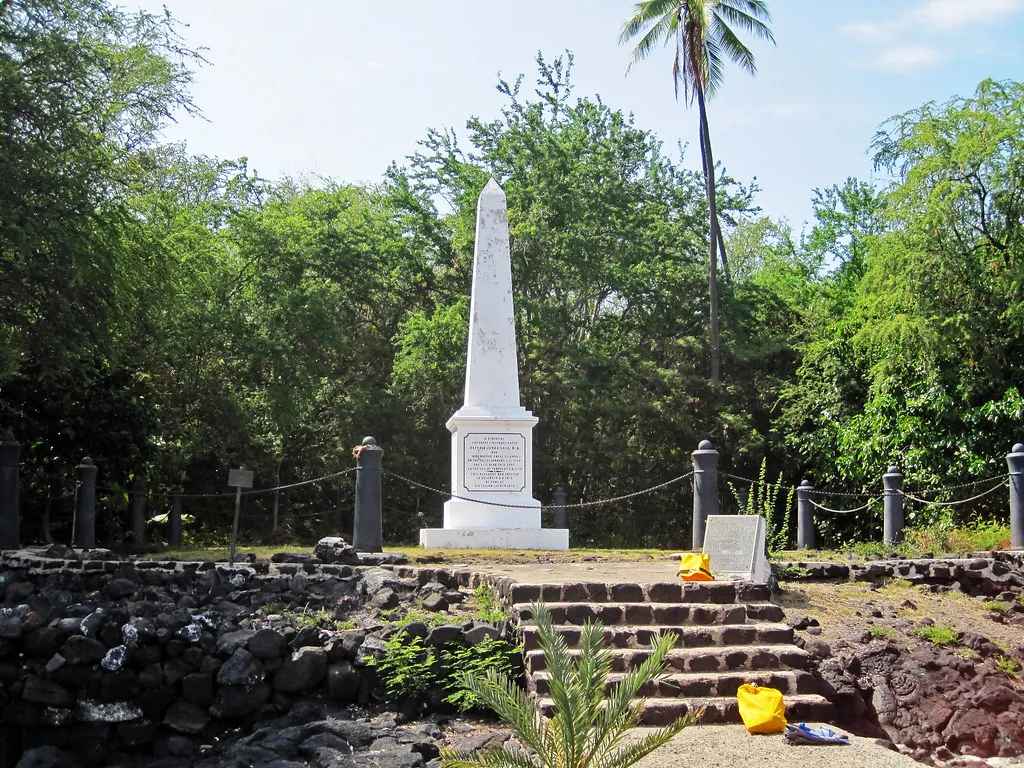
The obelisk stands on a small plot of British soil, roughly 25 feet square, a grave marker for four marines and a sailor killed in 1779. The wider monument commemorates a man whose arrival reshaped Hawaiʻi permanently, and the story deserves more care than a quick selfie. It is not a prop and it is not a climbing frame. At low tide you can find the submerged bronze plaque southwest of the obelisk, which is worth a look and nothing more. The Hawaiian perspective, and why this shoreline is sacred, is on the history page.
You are a guest at somebody’s grave and somebody’s church, in the same twenty metres of shoreline. Behave accordingly.
Parking Rules and the Break-In Reality
The Nāpōʻopoʻo Beach Park lot holds 20 to 30 vehicles, costs $0.00, and fills by 9:00 AM at weekends. The Kaʻawaloa trailhead parking is an unpaved shoulder at the very end of Nāpōʻopoʻo Road, roughly 3.8 miles downhill from the Highway 11 junction, fits 15 to 20 cars, and is also free. No overnight parking at either location, and the gates don’t care how far you’ve driven.
Break-ins here are opportunistic and they are not rare. Thieves work the shoulder lots looking for rental cars with visible bags, dry bags, cameras or electronics. Leave luggage and valuables at the hotel. Put rental paperwork out of sight, and leave the glovebox and centre console open and visibly empty so anyone peering through the glass can see there’s nothing worth the risk. It feels odd the first time. Do it anyway.
What Enforcement Actually Looks Like
The DLNR Division of Conservation and Resources Enforcement, DOCARE for short, patrols this bay by water and by land. Officers can cite you, confiscate a vessel and escort you back to the ramp, and they board boats at the mooring to check decals. They also know which roadside operations are unlicensed, because they deal with the same trucks every single week. There’s more on their remit at the DOCARE site, and the park’s own rules sit with DLNR State Parks.
Rangers and tour crews report things too. That said, enforcement is thin relative to the number of people in the water on a Saturday morning, so most compliance here is voluntary. Treat that as a compliment rather than a loophole.
Traveller Advice: The Short Version
- No admission fee, no lifeguards, no overnight access. Plan around the 8:00 PM gate closing.
- Touch nothing, feed nothing, remove nothing from the Marine Life Conservation District.
- Mineral sunscreen only, or a UPF 50+ rashguard. Bags are checked at harbour check-in.
- Give dolphins 50 yards, turtles two metres, and monk seals the beach.
- Rent kayaks only from operators with DLNR decals on both sides of the bow.
- Rental kayakers stay in the water. Landing at Kaʻawaloa is for three licensed operators only.
- Stay off Pali Kapu o Keōua, and stay out of the water when the winter surge is running.
- Carry 2.5 to 3 litres of water per person on the trail, and start before 7:00 AM.
- Leave the car visibly empty and the console open. The break-ins are real.
- Keep your voice low at Hikiau Heiau and the obelisk. They aren’t attractions in the usual sense.
Booking and Next Steps
If you’d rather have permits, landing rights and a guide handled for you, licensed boat and kayak trips run from about €74 (~$80) for a half-day snorkel up to €175 (~$189) for the historical dinner cruise to the monument. Booking ahead also means the paperwork is somebody else’s problem, which on a holiday is worth paying for.
Where to go next: the snorkelling hub for reef detail and entry routes, kayaking and boat access for permits and launch points, transport for parking and trail logistics, best time and weather for swell windows, plan your visit for facilities and packing, and the FAQ if you want a quick answer to something specific. If you have a spare half day, the Kona coffee and South Kona drive makes a gentle counterpoint to all this salt water.