I’ve lived in Kailua-Kona since 2016, and I’ve answered most of these questions while standing in a car park with a mask in one hand and a coffee going cold in the other. So this page does it properly: every answer opens with the actual fact (price, distance, verdict) and explains the caveats afterwards. If you’re still shaping the trip, start with Plan Your Visit.
A quick phonetic guide before we start. Kealakekua runs kay-AH-lah-kay-KOO-ah. Nāpōʻopoʻo is nah-POH-oh-POH-oh, the little harbour village at the south end. Kaʻawaloa, kah-AH-vah-loh-ah, is the flat shelf of rock where the monument stands. Say them out loud once and rangers, taxi drivers and kayak shop staff will know exactly what you mean.
The bay in numbers, before we get into it
Half the questions I get are really cost or logistics questions wearing a snorkel. Here’s the short version, with the detail further down.
| Item | Cost / Figure | What it means for you |
|---|---|---|
| State park admission | $0.00 (~€0) | Free for everyone, daily 7:00 AM to 8:00 PM |
| Nāpōʻopoʻo Beach Park parking | $0.00 (~€0), 20–30 spaces | Fills by 9:00 AM at weekends |
| Kaʻawaloa Trail | 3.8 mi round trip, 1,300 ft climb back | 40–50 min down, 60–90 min up |
| Licensed kayak rental | $65–$70 (~€60–€64) | Stay in the water; no landing at Kaʻawaloa |
| Guided snorkel tour | $80–$193 (~€74–€178) | The only way to land at the monument without hiking |
| Drive from Kailua-Kona | 12–17 mi, 25–35 min | Highway 11 south, then Nāpōʻopoʻo Road |
Snorkelling and access
Can you snorkel in Kealakekua Bay without a tour?
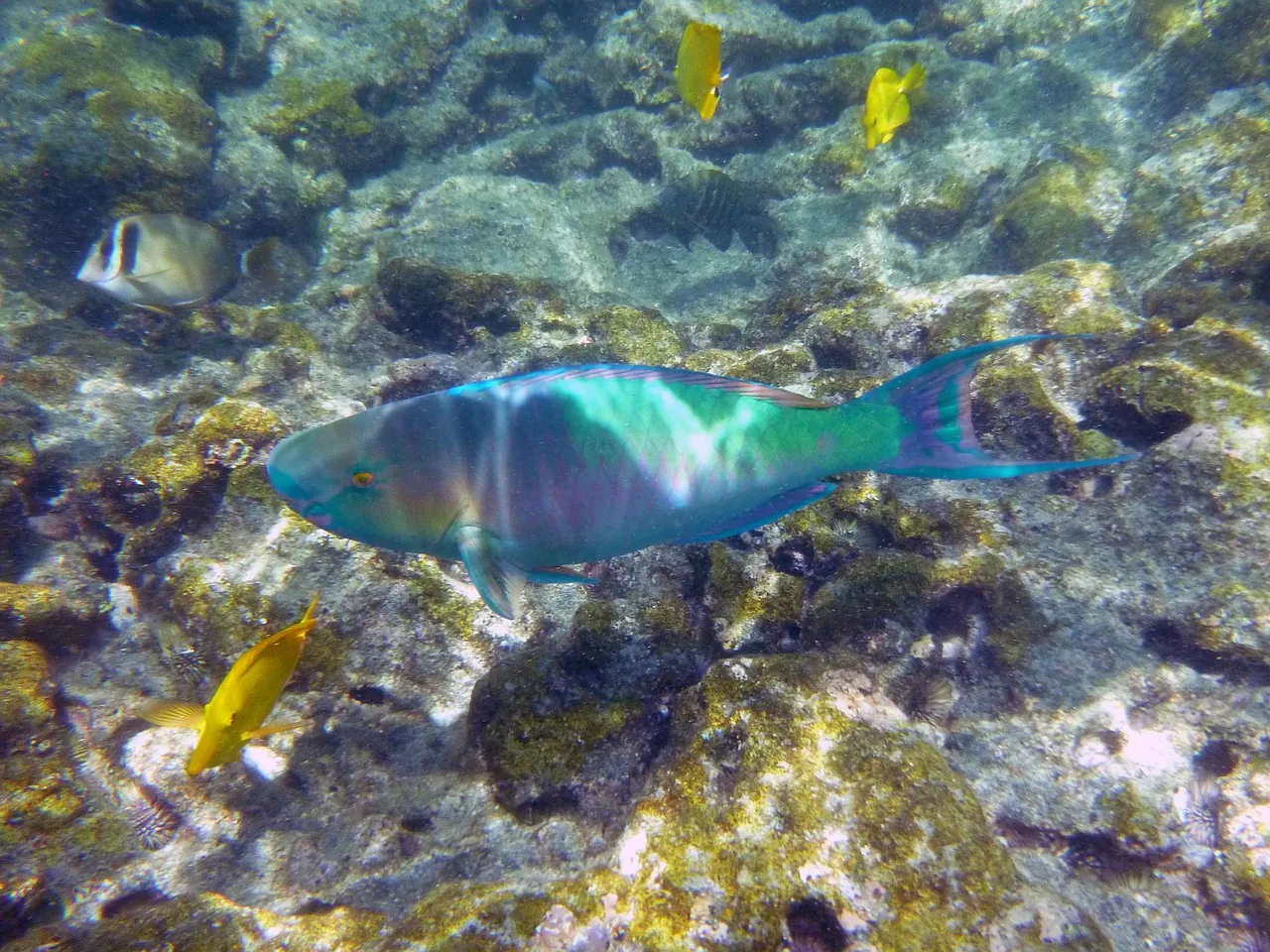
Yes. You can snorkel Kealakekua Bay for $0.00 (~€0) if you’re happy to walk, or roughly $65–$70 (~€60–€64) if you’d rather paddle. Three routes exist: the Kaʻawaloa Trail hike, a shore entry from Nāpōʻopoʻo Beach Park, or a licensed kayak rented from a shop displaying valid DLNR decals on the bow. Unguided kayaks may not land at Kaʻawaloa, and only three operators hold state landing permits, so paddlers snorkel tethered to the boat. Everything else sits on the snorkelling hub and the kayak page.
Is Kealakekua Bay the same as Captain Cook?
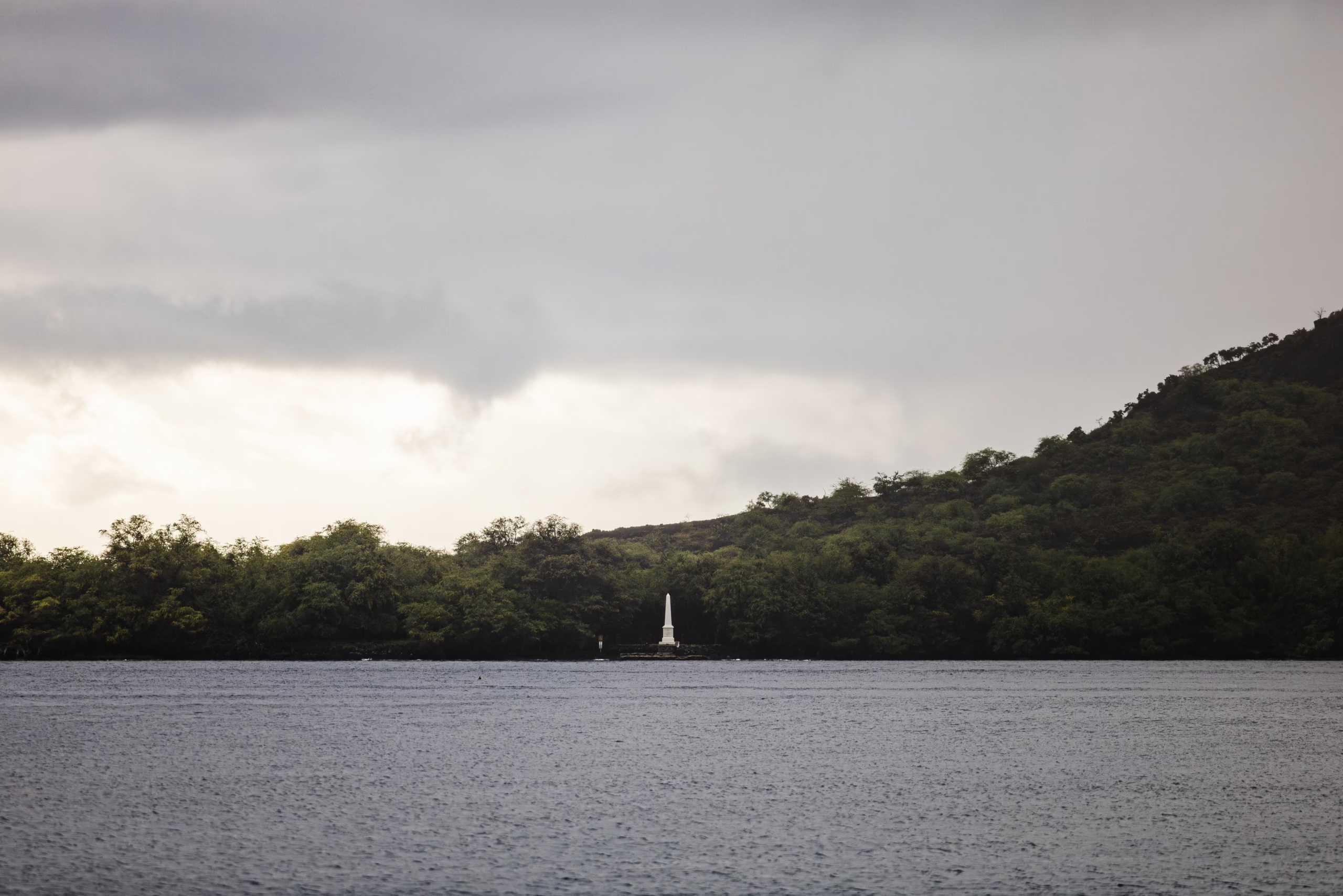
No. Captain Cook is the upland town strung along Highway 11 (ZIP 96704); Kealakekua Bay is the water at the bottom of Nāpōʻopoʻo Road, about four miles and ten minutes downhill by car. Visitors lose an hour a week to this confusion. The Captain Cook Monument is a 25-foot obelisk standing on a 25-square-foot slice of British soil at Kaʻawaloa, reachable by trail or boat only, with no road in. Keep the three separate in your head and the day gets easier. Background on the man, the town and the monument sits in Captain Cook and Hawaiian history.
Can you swim at Kealakekua Bay?
Yes, with two caveats that matter. Nobody is stationed as a lifeguard at Kaʻawaloa Flats or at Nāpōʻopoʻo, and entry at the monument is off a concrete jetty roughly 50 feet south of the obelisk. Sit on the edge, mask on, slide in. Winter north-west swell from November to March pushes surge across the shallow basalt shelf and makes getting out genuinely dangerous: if the water is heaving, don’t get in. There’s no sand here either. The nearest thing to a Kealakekua Bay beach is the boulder shoreline at Nāpōʻopoʻo, with no ADA water ramp and urchins on the rocks. Read visitor rules first.
Location, weather and the safety question
Which island is Kealakekua Bay on, and how far is it?
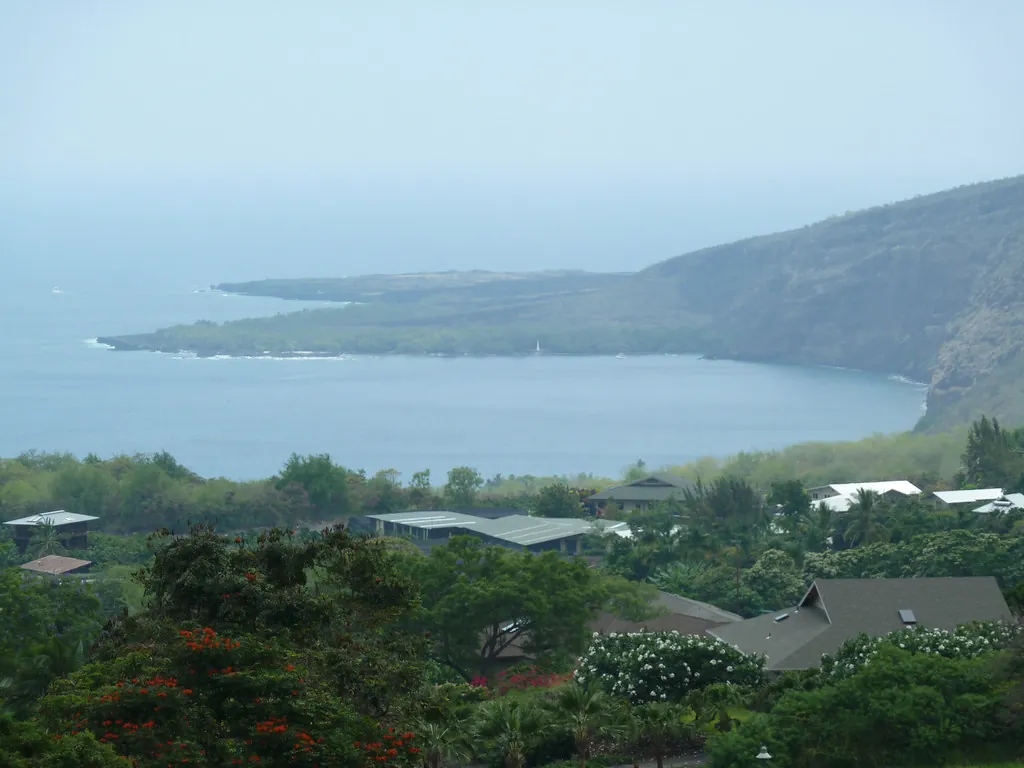
The Island of Hawaiʻi, the Big Island, in the South Kona district. From Kailua-Kona it’s 12–17 miles and 25–35 minutes by car. On any Kealakekua Bay Hawaii map you’ll see the shape of it: a bite taken out of the coastline, with the bay at the end of Nāpōʻopoʻo Road. Kona International (KOA) sits 24–27 miles and 40–50 minutes away, Keauhou Bay is 10 miles, and Puʻuhonua o Hōnaunau National Historical Park is about 14–15 miles and 30–35 minutes further south. Hilo is a 100–110 mile, two-and-a-half-to-three-hour haul. Driving notes live at how to get to Kealakekua Bay.
What’s the rainiest month in Kona, and does it rain at the bay?
December to March is the wettest stretch, though “wet” here means short afternoon showers rather than all-day soakings. Kealakekua Bay sits in a sheltered leeward band, so mornings stay clear almost year-round. Wind is the bigger spoiler. The onshore Kona breeze picks up around 11:00 AM and can cut underwater visibility, which is why local snorkellers are in the water by eight. Monthly visibility and rainfall notes are on best time and weather, and live forecasts come from the National Weather Service.
I’ve lived in Kailua-Kona since 2016, and I’ve answered most of these questions while standing in a car park with a mask in one hand and a coffee going cold in the other. So this page does it properly: every answer opens with the actual fact (price, distance, verdict) and explains the caveats afterwards. If you’re still shaping the trip, start with Plan Your Visit.
A quick phonetic guide before we start. Kealakekua runs kay-AH-lah-kay-KOO-ah. Nāpōʻopoʻo is nah-POH-oh-POH-oh, the little harbour village at the south end. Kaʻawaloa, kah-AH-vah-loh-ah, is the flat shelf of rock where the monument stands. Say them out loud once and rangers, taxi drivers and kayak shop staff will know exactly what you mean.
What’s the best month to go to Kona for snorkelling?
Late April to early October gives you the most reliable water. My own picks are June, September and the first half of October: flat seas, visibility over 100 feet, water at 26–27°C (79–81°F). November to March brings north-west swell that clouds the bay and can shut the jetty down for days, though it also brings humpbacks through the channel. School holidays in July and around Christmas fill the car parks by 9:00 AM sharp. The regional comparison is in best months for snorkelling in Hawaii.
Is it safe to go to Kona right now?
Yes. Violent crime in Kona is low and I’ve never felt uneasy at the bay. The ocean and the car park are the real risks. Smash-and-grab theft at the unpaved shoulder lot on Nāpōʻopoʻo Road is a genuine, repeating problem, so leave luggage at the hotel, put nothing visible in the car, and leave the glovebox and centre console hanging open to show they’re empty. The park closes at 8:00 PM, the trailheads are pitch black after dusk, and mobile reception is patchy at best. Check swell and vog before you commit.
Money, gear and the human body
Is $5,000 enough for a week in Hawaii?
Yes, roughly. $5,000 (about €4,600) covers a week for two in Kona if you book a mid-range condo and cook half your meals. A South Kona studio runs $180–$260 (~€165–€240) a night, a rental car $60–$90 (~€55–€83) a day, and groceries plus casual meals $80–$120 (~€74–€110) a day for two. Add one guided snorkel trip at $80–$193 (~€74–€178) per person. The bay itself is free: no admission, no parking charge at Nāpōʻopoʻo. Full budget detail sits in plan your visit.
What colour should you not wear when snorkelling?
Honestly, the fish don’t mind. The colour question is really about what you’ll see, not what to wear: red vanishes at about 5 metres (16 ft), orange around 10, yellow near 15, which is why a reef reads blue-green until you’re almost on top of it. That’s also why torch-lit photographs look nothing like your memory of the dive. Skip shiny jewellery, rings and anything that flashes in the sun, because barracuda are curious if not aggressive. Muted neoprene is fine, but fit and comfort beat colour every time.
Why do I feel sick after snorkelling?
Usually one of three things: swallowed seawater, dehydration, or cold. You’ve also been staring down at moving water for 45 minutes, which is a mild motion-sickness trigger even on a glassy day. Drink a litre of water before you get in, eat something small, and sit on the jetty for ten minutes afterwards instead of marching straight up the trail. If nausea and dizziness haven’t settled within an hour, or you have ear pain, get it looked at. Ruptured eardrums and inner-ear trouble aren’t things to shrug off. More in Hawaii snorkelling safety.
Who shouldn’t do snorkelling?
Skip it if you have uncontrolled asthma, epilepsy, a recent heart attack or chest surgery, a perforated eardrum, or an active ear or sinus infection. The same goes if you can’t swim 50 metres unassisted, or if deep water makes you panic, because the Kaʻawaloa entry drops you straight into depth off the jetty with no gradual shelf. Pregnant snorkellers should clear it with their doctor first. Diabetes and high blood pressure aren’t automatic exclusions, but a quick word with your GP before you fly is cheap insurance. The full checklist sits with visitor rules and guidelines.
The bay doesn’t need a tour guide to be extraordinary. It needs you to arrive early, stay off the coral, and leave before the afternoon wind turns the gin cloudy.
Two more questions people ask on the way out
What did the Hawaiians do with Captain Cook?
They killed him. On 14 February 1779, at Kaʻawaloa, Cook was struck down in a clash on the shoreline after a boat was taken from the bay, and the obelisk now stands near the spot. The fuller story is messier: he arrived during Makahiki and was received as Lono, then relations soured when a mast broke and a shore boat went missing. Four marines died alongside him, and several Hawaiians were killed. His remains received high-status ritual treatment. Read it properly at Captain Cook and Hawaiian history before you walk the trail. It’s a grave site, not a photo backdrop.
Is Captain Cook town worth visiting?
Yes, as a base rather than a destination. The town itself is a four-mile ribbon of coffee farms, a hardware store, a supermarket and a couple of genuinely good bakeries along Highway 11, with no beach and no bay views from the road. It’s 10–15 minutes from Nāpōʻopoʻo and about 20 from Kailua-Kona, which makes it a quieter, cheaper place to sleep. Use it for breakfast and a bed, then drive down to the water. If you fancy the scenic loop, see Kona coffee and South Kona scenic drive.
I only have two hours. Is it worth it?
Not on foot. The Kaʻawaloa Trail alone is 3.8 miles round trip with 1,300 feet of climbing on the return, so two hours means racing the sun and skipping the snorkel entirely. By boat it’s easy: a Zodiac or catamaran out of Keauhou Bay gets you there in 20–30 minutes, and morning trips start at about $145 (~€125) per person. Time it well and you’ll have a half-empty cove. Commercial boats moor from 9:15 to 9:30 AM, the crush runs 9:45 AM to 12:30 PM, and the midday lull between 1:00 and 3:30 PM is the quietest water of the afternoon. Compare departures on the tickets and tours page.
If you’re hiking down, start between 6:30 and 6:45 AM. You’ll reach the monument before 7:30, get two hours of flat, sparkling water to yourself, and beat both the tour boats and the midday heat on the climb back.
Where to go next
Still got a gap in the plan? These are the pages that pick up where this one stops. The bay is a Marine Life Conservation District, which means the rules aren’t decorative, and the I’ve lived in Kailua-Kona since 2016, and I’ve answered most of these questions while standing in a car park with a mask in one hand and a coffee going cold in the other. So this page does it properly: every answer opens with the actual fact (price, distance, verdict) and explains the caveats afterwards. If you’re still shaping the trip, start with Plan Your Visit. A quick phonetic guide before we start. Kealakekua runs kay-AH-lah-kay-KOO-ah. Nāpōʻopoʻo is nah-POH-oh-POH-oh, the little harbour village at the south end. Kaʻawaloa, kah-AH-vah-loh-ah, is the flat shelf of rock where the monument stands. Say them out loud once and rangers, taxi drivers and kayak shop staff will know exactly what you mean.