Hawaii Snorkeling Safety: Currents, Reef Etiquette, and What to Avoid
The “Kona Is Always Calm” Myth, and What It Costs People
Seven o’clock in the morning and Kaʻawaloa Cove (kah-AH-wah-LOH-ah) is doing its best impression of a swimming pool. No wind, no chop, the basalt shelf dropping away into water so clear it feels like looking through gin. Old Faithful, my ten-year-old snorkel mask with the scratched lens, is perched on my forehead, and I have roughly four hundred metres of reef entirely to myself.
Give it four hours. The 11 a.m. Kona breeze fills in from the south-west, the surface lifts into short, slappy chop, and the same cove that looked like a postcard at dawn now nudges you sideways every time you lift your head to breathe.
Calm on this coast is a schedule, not a setting.
What follows is a Big Island safety briefing for anyone planning to get in the water, built around two contrast cases: Kealakekua, which has no lifeguards anywhere on its shoreline, and Kahaluʻu (kah-hah-LOO-oo) down the road, which does. If you want the reef itself in detail, the Kealakekua Bay snorkelling guide covers it properly. This page is about the water misbehaving, and how to be ready for it.
Four Things That Actually Hurt Snorkellers (None of Them Are Sharks)
Strip away the mythology and the injury list is short and boring. Which is good news, because boring things can be prepared for.
- Current and surge. Longshore drift that walks you fifty metres down the coast while you’re watching a fish, or winter swell that slams you into rock on the way out.
- Reef contact. Coral cuts that go septic in warm water, vana (sea urchin) spines through a foot, and lava benches that shred skin far more efficiently than any animal.
- Heat, sun and dehydration. The unglamorous one. You lose fluid while swimming, then climb 1,300 feet of unshaded trail at 32°C and wonder why your legs stop working.
- Human error. Full-face masks, going in alone, no fins, no buddy check, and the conviction that because the water looks flat, it must be easy.
Notice what didn’t make the list. Eels, urchins and the odd reef shark cause pinpricks and panic, not fatalities. Drowning is what fills the statistics on this island, and it disproportionately takes visitors in their first two or three days, often in conditions that looked perfectly inviting from the beach. Reef-safe sunscreen and a dry bag are lovely. A buddy and an exit plan are the actual safety equipment.
Currents on the Kona Coast, Decoded
Three things drive water movement along the leeward shore, and none of them are visible from the car park. Longshore drift runs parallel to the coastline, gentle enough that you barely notice it, relentless enough that after forty minutes of face-down fish-watching you surface a hundred metres from your towel. The afternoon Kona breeze stacks surface water against the shoreline until it has to go somewhere, usually sideways. And bay mouths squeeze tidal flow into a narrow exit, which is why the current at the mouth of a cove can be three times what it is in the middle.
You can read all of this from dry land in about ninety seconds. Look for the sand plume drifting off a beach entry: it points exactly where the water is heading. Look for the ripple line offshore, the darker band where wind has caught the surface, and note which way it’s travelling. Then look at the moored boats or the kayaks on their tethers. If every hull is swinging the same direction, that’s your drift.
Here’s the rule that solves most of it: swim into the current on the way out, and let it carry you home. It feels counter-intuitive, because the instinct is to head for the calm patch first. But a tired snorkeller swimming against drift is the classic setup for a bad afternoon, and on a coast with no lifeguard towers, nobody is coming to fetch you.
Surge and Swell: November to March Is a Different Bay
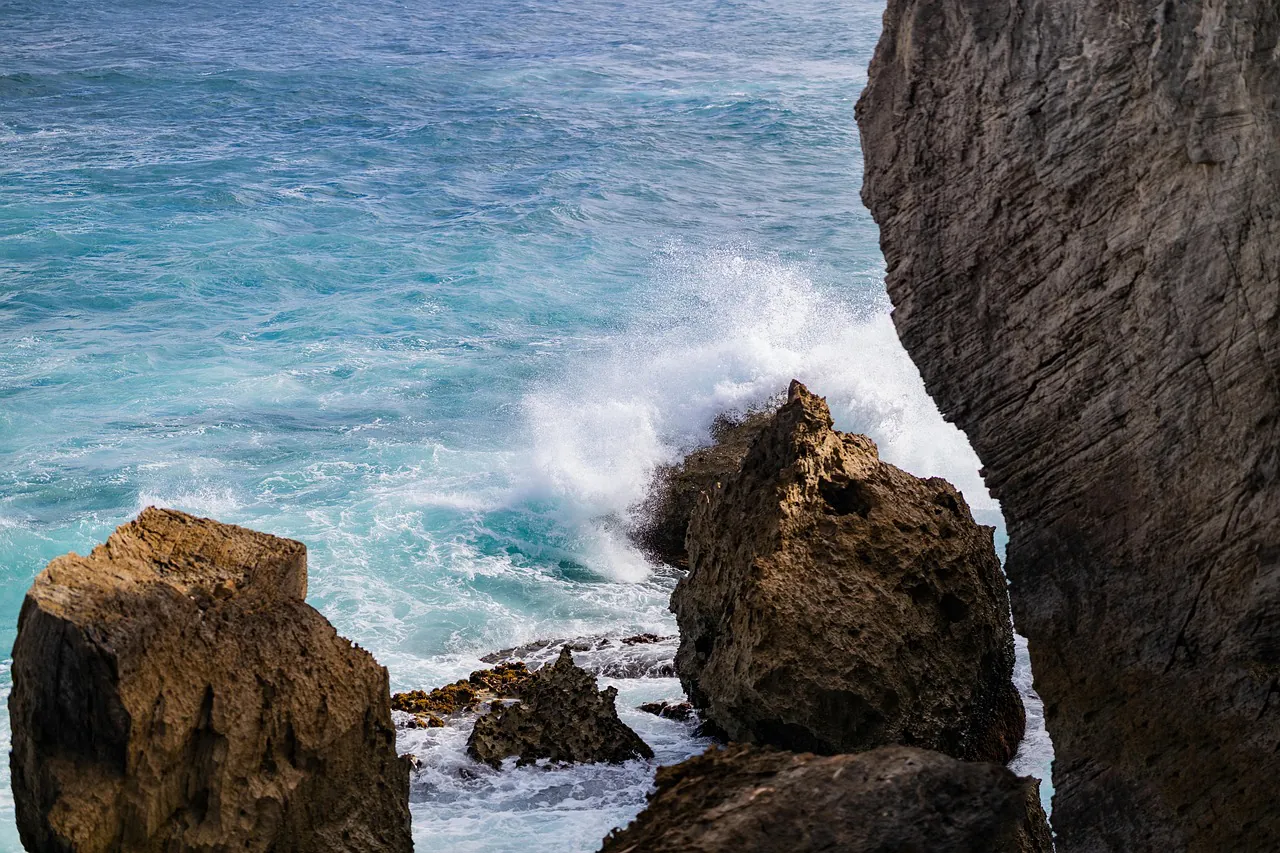
Summer on this coast is forgiving. Winter is not. From November through March, north-west swell generated by storms thousands of miles away arrives at west-facing bays and turns a flat entry point into a washing machine on a ten-to-fifteen-second cycle. The water doesn’t look dramatic from the cliff. It looks like a normal bay with slightly bigger waves. That’s the trap.
Exit is the dangerous half. Most people can time an entry, because they’re fresh and watching. Two hours later they’re cold, tired, and being pushed towards a concrete jetty or a basalt ledge with a wave behind them. At Kaʻawaloa, the concrete jetty is the case study: in swell, it becomes a launching ramp for swimmers onto volcanic rock, and I’ve watched grown adults come out of there with lacerations down one shin and urchin spines in a palm. The ledge doesn’t care how good a swimmer you are.
Stand on the shoreline and count ten full wave cycles before you commit. If the tenth set still pushes water up over the ledge, that’s your answer for the day: swim somewhere sheltered instead. Ten waves takes about two minutes and has saved me more skin than any piece of kit.
Neither Kaʻawaloa nor Nāpōʻopoʻo (nah-POH-oh-POH-oh) has a stationed lifeguard, and the bay closes at 8 p.m. Kahaluʻu has lifeguards and a daily conditions board. Check the current Hawaii Beach Safety report before you leave the hotel; it takes thirty seconds and it will tell you which coast is being hammered.
Entry and Exit by Shoreline Type
Every Big Island snorkel site has its own handshake. Learn the entry before you learn the reef.
- Concrete jetty (Kaʻawaloa): Sit, turn, lower yourself in with both hands on the edge, and keep your mask on your face. Getting out means waiting for the surge to lift you, then committing hard onto your knees. Do not turn your back to the water while you’re still on the steps.
- Boulder beach (Nāpōʻopoʻo Beach Park): Round basalt, wet and slippery, no sand to cushion a fall. Fins on before you walk, one hand free, and shuffle rather than stride. The freshwater rinse shower is at the top of the ramp; use it before you take your gear off.
- Sand and rock (Kahaluʻu): The friendliest entry on this coast, which is precisely why it’s also the busiest. Watch the lifeguard flags, stay inside the marked channel, and don’t wander onto the reef shelf where people stand.
- Shallow lava bench (Two Step at Hōnaunau): Beautiful and unforgiving. The bench is ankle-deep and full of vana. Reef booties or old trainers are not optional here, and the exit ladder fills up fast when a tour boat unloads.
Then the three habits that apply everywhere. Fins on before you commit to the water, not bobbing about trying to wrestle them on in waist depth. Mask on and sealed in ankle depth, so you can test it with one dip rather than a full faceful of salt. And never, ever turn your back on the water to admire the view, fix your straps, or wave at somebody. On this coast, that’s how the injury stories start.
The Kit That Keeps You Out of Trouble
Two-piece mask and snorkel
The boring, correct choice. A separate mask and tube means you can clear water, drop the snorkel to talk to your buddy, and breathe normally whenever you want. Prescription mask rentals are widely available in Kailua-Kona for around $15 to $25 a day, and they are worth more than any camera rig.
Full-face mask
Better view, bigger lung problem. The dead space traps carbon dioxide, which brings on shallow breathing, light-headedness and, occasionally, panic in people who have never panicked in water before. Fair Wind has banned them on its vessels, and several Kona operators quietly follow suit.
On fins: they are safety equipment, not a fashion statement. A pair of short fins adds enough speed to outswim a current you’d otherwise be stuck in, and they keep your legs off the coral when the reef shelves up. Rent from a shop that will check the fit, not from a van at the roadside.
Reef Etiquette That Is Also a Legal Matter
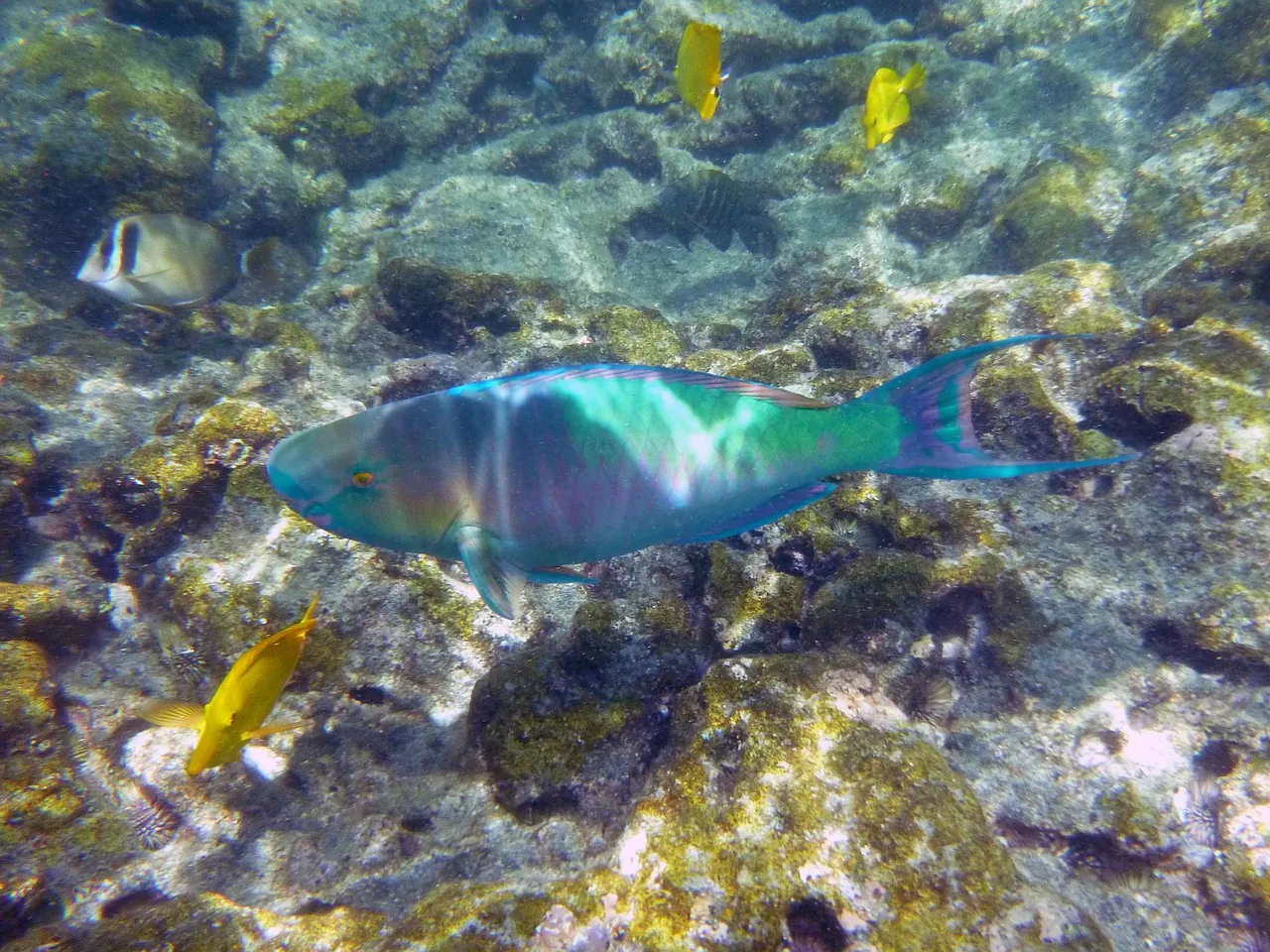
Kealakekua Bay sits inside a Marine Life Conservation District, and the rules here carry enforcement, not just moral weight. Touch the coral, stand up on the shelf, feed a fish or pocket a shell, and you’re in the territory of the DLNR Division of Conservation and Resources Enforcement. DOCARE officers patrol the bay by boat, and the fines are real money. The full list lives on the visitor rules page; here’s the working version.
- No touching. Coral here is slow-growing. A fingertip of contact kills polyps that took decades to build.
- No standing. If you need a rest, float on your back or use your fins. Horizontal, always.
- No feeding, no gloves, no collecting. Gloves are the classic signal that someone intends to grab. Leave them in the car.
- Reef-safe sunscreen only. Hawaii’s Act 104 outlaws sunscreens containing oxybenzone and octinoxate, effective since 2021 (prescription products excepted). Zinc and titanium formulas are easy to find locally.
Practical sunscreen advice: apply it forty minutes before you get in, and wear a rash vest so the reef gets less of it in the first place. Honest answer? A long-sleeve top beats any bottle in the car park.
Wildlife Distance Rules, With Actual Numbers
- Spinner dolphins: 50 yards (45 metres). This is a NOAA federal rule, not a suggestion. Deliberately approaching or pursuing them is a violation of the Marine Mammal Protection Act, and NOAA’s inflation-adjusted civil penalties now run above $30,000 per violation. If dolphins swim to you, stop, stay still, and let them pass.
- Sea turtles (honu): 10 feet (3 metres). They’re protected under the Endangered Species Act and they are far less chilled about you than Instagram suggests. Same for the green algae they graze on: don’t kneel on it to get a photo.
- Hawaiian monk seals: 50 yards minimum. If one hauls out on the beach or the jetty, clear the area, keep dogs and children back, and report it to the NOAA hotline on (888) 256-9840.
- Things that sting: vana and moray eels. Both are avoidable. Never coral-walk to reach deeper water, and never put a hand into a crevice to steady yourself.
Read the NOAA fisheries.noaa.gov guidance on spinner dolphin approach rules before you get in the water.
“Why Do I Feel Sick After Snorkelling?”
Three separate things cause it, and they need three different fixes. First, motion: swell and surge keep your inner ear working overtime, which is why people who never get seasick on boats still feel rough after an hour in choppy water. Stay shallow, keep your breathing slow, and get out before it turns into nausea.
Second, carbon dioxide. Breathing quickly and shallowly through a snorkel tube, especially in shallow water where you’re hovering with effort, traps CO₂ and gives you the headache plus the woozy, disconnected feeling that makes people think they’re dehydrated. Slow your breath, drop the snorkel out, tread water and breathe normally for two minutes. It resolves surprisingly fast.
Third, swallowing seawater, which happens more than anyone admits when you’re laughing or trying to talk. Small volumes are harmless; a proper mouthful will have you coughing and retching. Sit up, spit, sip fresh water. If you’re vomiting, dizzy, or your vision is doing odd things, that’s your signal to get out and stay out. There’s no shame in it, and no lifeguard at Kaʻawaloa to notice you going quiet.
“Why Do the Colours Disappear Underwater?”
Water absorbs red light first, and it happens within the top three to four metres. That’s why the reef that looked like a fruit stall from the surface photographs as grey-green mush, and why the fish you swear was crimson turns out to be a dull bronze in your pictures. Nothing is wrong with your eyes or your camera.
The fixes are practical. Get close, within half a metre, because light travels badly through water and a flashgun only reaches so far. Shoot in the morning when the sun is high-ish and visibility is at its best. If you’re using a phone in a housing, lock the white balance manually rather than letting the software guess. And accept that some of the best things you’ll see all day will be far too grey to post, which is fine. Kealakekua keeps its colour somewhere other than your camera roll.
Who Should Skip Snorkelling
This isn’t a disclaimer to click past. Snorkelling involves cold water, breath-holding, prone posture and occasional chop, and there are conditions where the risk genuinely outweighs the reward.
- Heart and lung conditions, including uncontrolled high blood pressure, recent heart surgery, or anything that makes sudden immersion dangerous. Ask your cardiologist, not the internet.
- Epilepsy, unless seizure-free and cleared by your neurologist. Water and seizures are a fatal combination more often than they should be.
- Pregnancy. No one can guarantee the levels of exertion, illness risk or emergency access out there.
- Active asthma, ear infections, perforated eardrums or blocked sinuses. If you can’t equalise or you’ve had a cold in the last fortnight, wait.
- Non-swimmers and panickers. Twenty minutes of proper instruction in a pool at home is worth more than any boat ticket. There’s no ground to stand on here.
- Children under about six, and anyone who’s been drinking. Alcohol plus reef plus afternoon chop is how the worst days happen.
If that list rules you out, the bay still works as a spectator. Kealakekua is a State Historical Park first and a snorkel site second, and reading about the history of Captain Cook’s arrival from a picnic blanket is a perfectly good afternoon.
When It Goes Wrong: Rescue, 911 and Where to Get Help
Snorkel with a buddy, and keep within five metres of each other so you can actually see a hand signal. Agree on the shout-and-wave drill before you get in: arm up, one shout, then get to the nearest exit point together. Nobody snorkels alone. Not because it’s unlucky, but because a cramp at Kaʻawaloa in March is an unassisted swim to a rock ledge.
Mobile reception along Nāpōʻopoʻo Road is patchy and drops to nothing in places, and there are no emergency call boxes. Tell somebody at your hotel exactly where you’re going and when you expect to be back. If you’re calling 911, be able to name your location: “Kaʻawaloa Flats, below the Captain Cook Monument, Kealakekua Bay” is far more useful than “the bay”.
For anything needing stitches, spines dug out or a chest check, Kona Community Hospital at 79-1019 Haukapila Street in Kealakekua is the nearest emergency department, with a 24-hour ER and roughly 20 minutes back up the hill from Nāpōʻopoʻo. Rinse reef cuts with fresh water rather than seawater, and get them looked at the same day.
The What-to-Avoid List
| Thing to avoid | Why it bites | Do this instead |
|---|---|---|
| Bargain afternoon cruises | Cheap for a reason: they reach the bay at 2 p.m. into rising wind and 12-15 metre visibility | Book a morning departure. A Fair Wind II morning trip runs around €185 (~$194); the afternoon version is roughly €137 (~$144) and the water quality difference is not subtle |
| Full-face masks | CO₂ build-up, panic risk, banned by several operators | A fitted two-piece mask and snorkel, tested in the shallows first |
| Chemical sunscreen | Illegal to sell in Hawaii, damaging to coral, and worse sun protection than a shirt | Zinc or titanium formula, applied 40 minutes early, plus a rash vest |
| Roadside kayak “deals” | Unlicensed vendors with no DLNR decals. Rental kayaks may not land at Kaʻawaloa, and DOCARE escorts violators out | A permitted operator with decals on both sides of the bow, or a licensed guided tour |
| Third-party resellers | Marked-up rates, no direct line to the operator when weather cancels your trip | Book direct or through a platform with free cancellation |
| Trail trainers with no grip | Loose basalt scree plus 1,300 feet of descent equals a sprained ankle two miles from the car | Proper hiking shoes, 2.5-3 litres of water per person, and a start before 7 a.m. |
The bay doesn’t need you to be brave. It needs you to be slow, early, and honest about your own limits.
A Safety-First Morning at Kealakekua, Hour by Hour
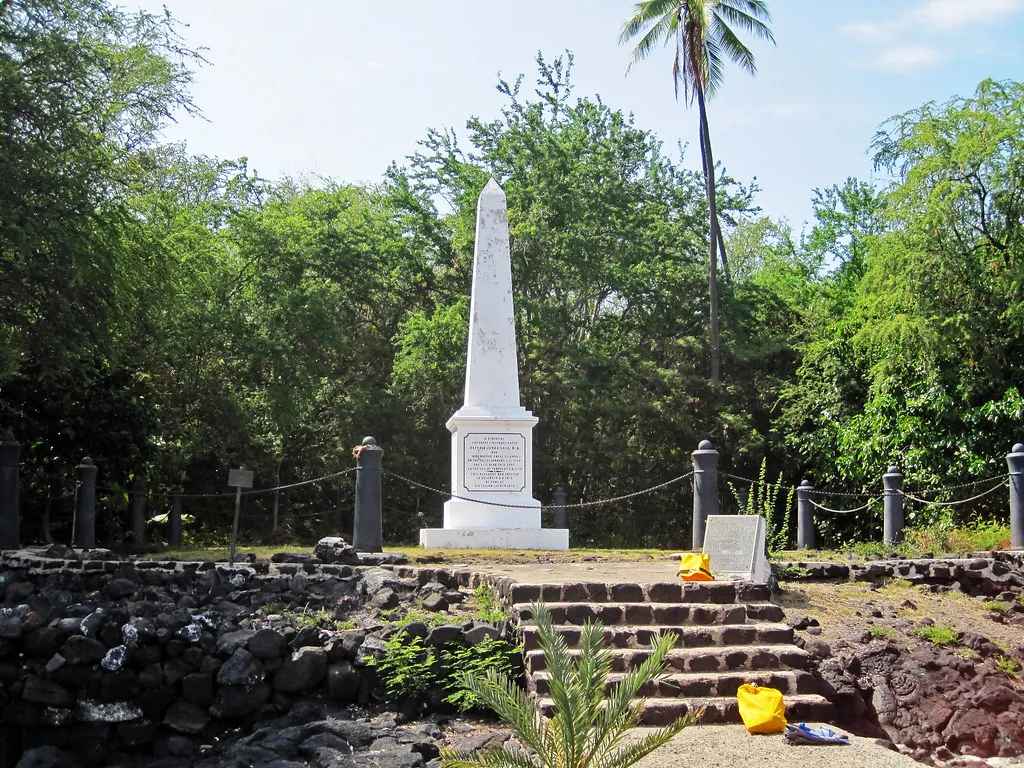
This is the shape of a good day, built around the commercial boat schedule and the wind rather than against them.
- 6:30 a.m. at the trailhead. Park on the dirt shoulder at the end of Nāpōʻopoʻo Road, roughly 3.5 miles down from the Highway 11 junction and just past the wharf. Leave absolutely nothing visible in the car. Not a towel, not a bag, not rental paperwork.
- 7:00 a.m. on the reef. Flat water, horizontal visibility over 30 metres, and wildlife feeding undisturbed. This is the two-hour window that justifies the whole trip.
- 8:30 a.m. check-in with yourself. Are you cold, tired, or breathing fast? Drink something. Reapply zinc sunscreen.
- 9:15 a.m. the boats arrive. The 60-foot catamarans moor in the cove and 100 to 200 snorkellers can be in the water by 9:45. It gets busy, not dangerous, but buddy separation happens fast.
- 11:00 a.m. the chop builds. Surface conditions turn slappy, visibility drops, and exits get harder. Start heading in if you haven’t already.
- 11:30 a.m. out of the water, climbing. The ascent is the part people underestimate. Steady pace, shade where you find it, water every fifteen minutes.
If you’re arriving by boat rather than by trail, you skip the climb entirely and get the same reef. Compare departure times before you book, because a 7 a.m. raft and a 2 p.m. catamaran are two completely different experiences of the same bay. Our tickets and tours page lists what’s actually running, and the best time and weather guide explains which months give you that flat, gin-clear water in the first place.
One last thing, and it’s the sort of detail that never makes it into a safety brief. Pack the car the night before. Fins, mask, dry bag, two litres of water, sunglasses, a towel you don’t mind ruining. The morning you’re fumbling around a hotel room at half five looking for a snorkel is the morning you skip the check on conditions and get in the water anyway. Snorkeling at Kealakekua Bay rewards the boring preparation: early start, right kit, honest read of the swell, and a willingness to call it if the ocean says no. The bay will still be there tomorrow, and on this coast tomorrow is usually calmer before nine.