Kona Coffee and South Kona Scenic Drive
The Road That Smells of Coffee and Hot Asphalt
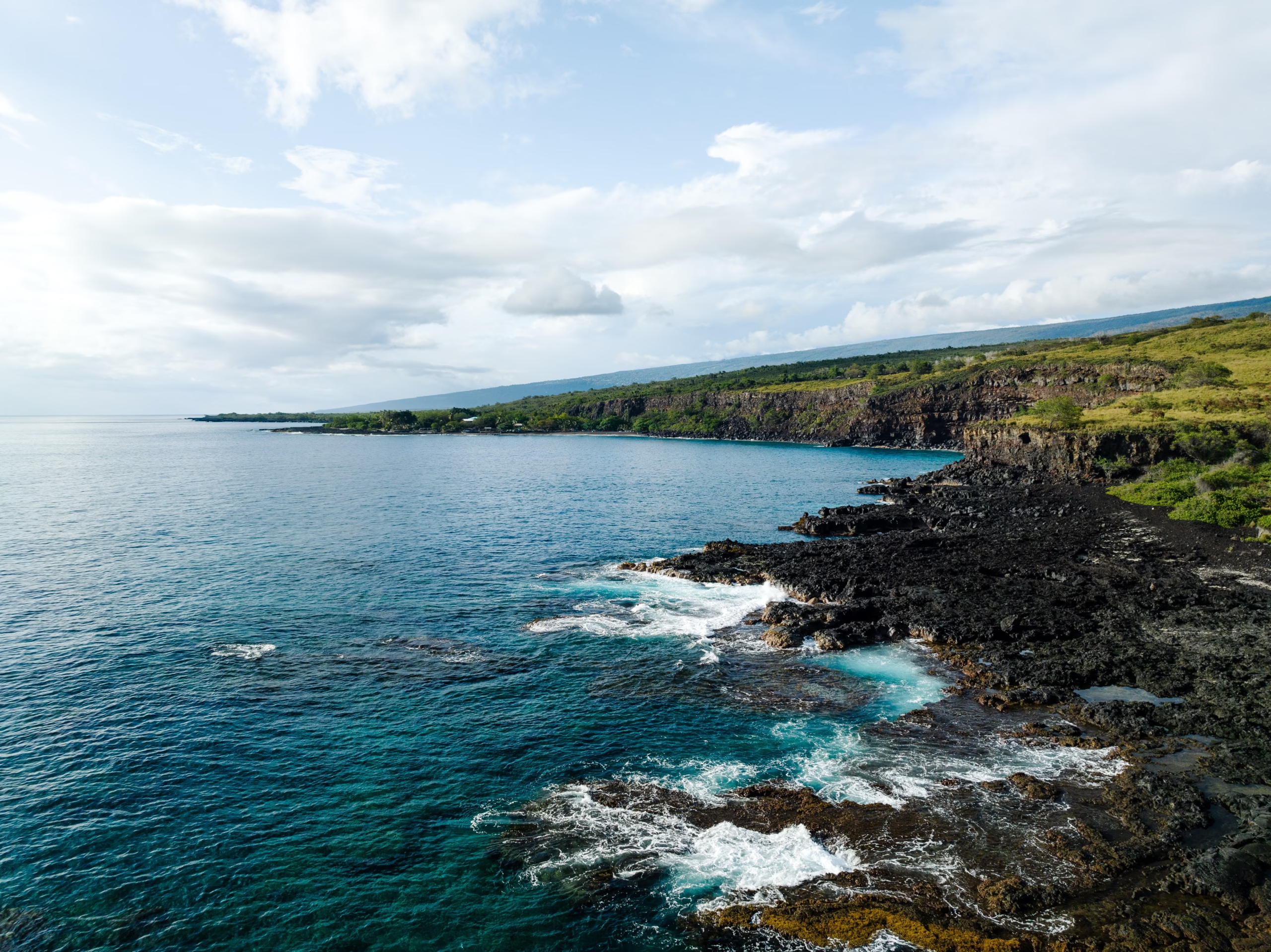
Route 11 climbs south out of Kailua-Kona and within ten minutes the air changes. Somewhere around the 1,000-foot mark you get that sweet, slightly burnt-toast smell drifting off the drying sheds, and the temperature drops enough that you finally stop regretting the car’s broken air conditioning. This is the Kona coffee belt: a narrow band on the leeward slope of Hualālai and Mauna Loa, roughly one to three miles wide, running about twenty miles from Holualoa down to Hōnaunau, sitting between 500 and 3,000 feet above the water.
Here’s the pitch. A half-day loop, 35 to 40 miles round trip, no boat, no permit, no 6 AM alarm. You will be back in Kailua-Kona by mid-afternoon with a bag of coffee, a full stomach, and a photograph of a bay that has been used as a highway, a sanctuary and a grave. I make this drive most months and I still miss the Nāpōʻopoʻo turn if I’m talking too much. Slow down at the junction.
The Route at a Glance
Distances are measured from Aliʻi Drive in Kailua-Kona. Driving times assume daylight, dry tarmac and no cruise ship in port, which is the bit that catches everyone out.
| Stage | Distance | Driving minutes | Parking reality | Best arrival window |
|---|---|---|---|---|
| Kailua-Kona (start) | 0 mi | 0 | Free street parking is gone by 8:00 AM on weekdays | 7:00–7:30 AM |
| Kainaliu | 11 mi | 20 | Angled roadside bays only, no car park | 8:00–9:30 AM |
| Kealakekua village | 12 mi | 22 | Roadside bays, church car park fills on Sundays | 9:00–10:00 AM |
| Captain Cook | 13 mi | 25 | Small public strip behind the shops, plus a fuel station | 10:00–11:30 AM |
| Nāpōʻopoʻo Road junction and bay overlook | 15 mi | 30 | Dirt shoulder, 15 to 20 cars, no markings, no bins | Before 9:00 AM or 1:00–3:30 PM |
| Hōnaunau | 20 mi | 40 | National park lot, rarely full after 2:00 PM | Any time, quietest 2:00–4:00 PM |
The old road through Kainaliu and Kealakekua runs parallel to Route 11 for most of this stretch and it is slower, prettier, and lined with shops rather than guardrails. Stay on the highway if you’re running late. Take the old road if you’re not, because doing 45 mph past three generations of storefronts seems a waste of a good morning.
Why the Coffee Tastes of Somewhere Specific
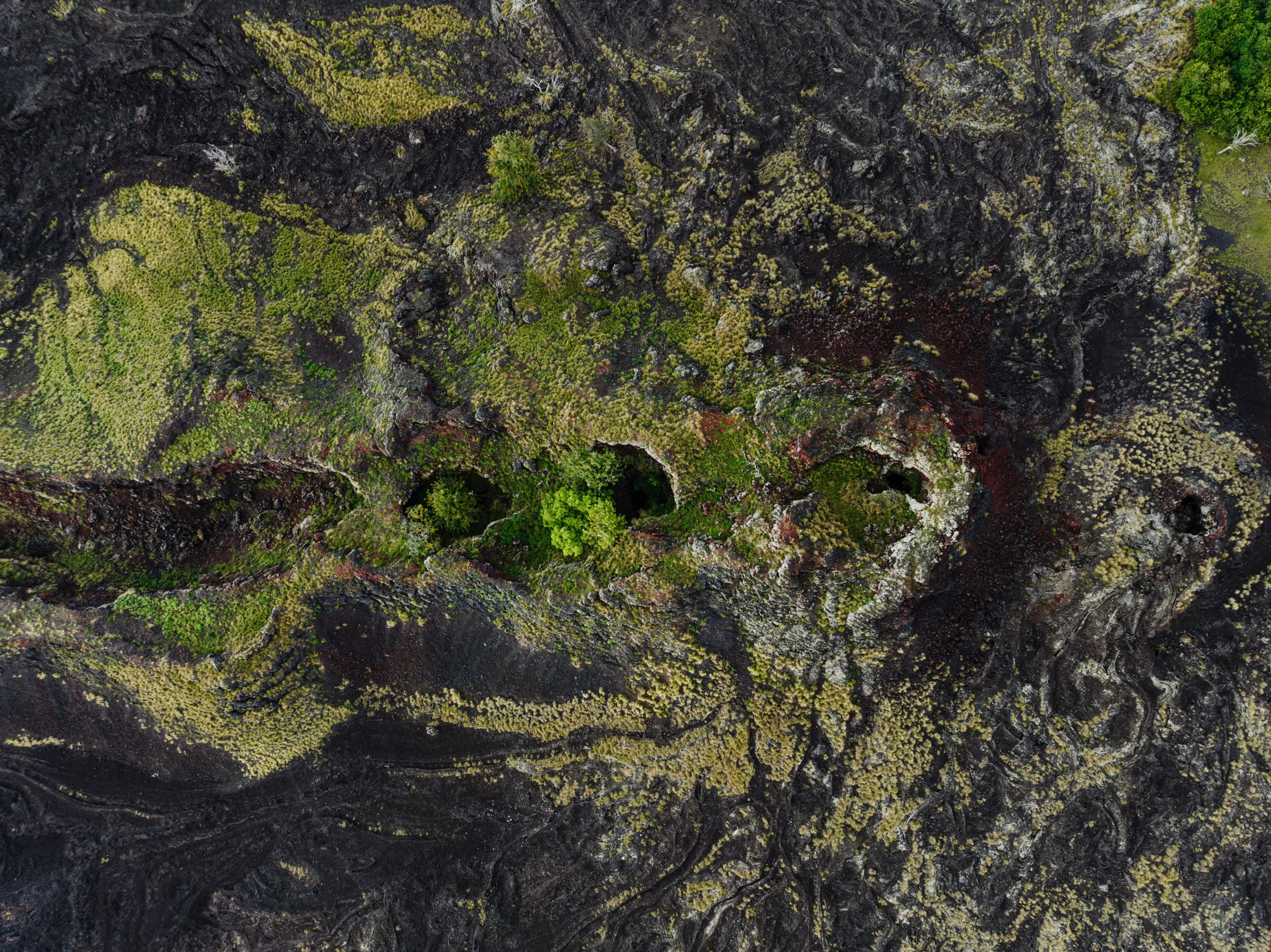
Every afternoon around two o’clock, a cloud parks itself on this slope. It is not dramatic weather. It is simply a lid, and it keeps the coffee trees cool through the hottest hours of the day. Add volcanic soil that drains fast, shade trees that hold the moisture, and picking done by hand rather than machine, and you get a bean that ripens slowly and tastes of something you can’t reproduce at scale.
Harvest runs roughly August to January, with peak picking October to December. Turn up in late October and you’ll see the real thing: ladders in the rows, pickers with buckets slung across their chests, and half-harvested branches rather than a tidy postcard. Handy timing, that, because it’s also when the farm counters have the freshest stock on the shelf.
“100% Kona” versus “Kona Blend”
This is the single most useful thing anyone can tell you before you spend money up here. A bag marked 100% Kona must contain only coffee grown in the Kona district. A bag marked Kona Blend can legally contain as little as ten per cent Kona beans and still carry the name, blended with cheap imported coffee. The labelling rules are administered through the Hawaiʻi Department of Agriculture’s measurement standards branch, and the wording on the front of the bag is regulated even if the price tag is not.
So read the small print, not the picture of the hula dancer. Nobody is being shady about this. The blend is a perfectly decent everyday coffee. It just isn’t what most visitors think they’re buying.
Stop One: Breakfast, and an Honest Word About The Coffee Shack
The Coffee Shack sits at 83-5799 Māmalahoa Highway in Captain Cook, built into the hillside at about 1,400 feet with a lanai that drops straight down towards the coastline. It opens daily, 7:00 AM to 3:00 PM. Entrees run $10.95–$17.95 (~€10–€16.50), the eight-inch pizzas $13.95–$15.95, and Kona coffee drinks $4.50–$5.75. Their own site and hours live at coffeeshack.com.
The view is genuinely spectacular. The queue between 8:30 and 10:30 is genuinely long, often forty minutes, and there is nowhere comfortable to stand while you wait. You have two sensible decisions here and I’ve made both of them repeatedly.
Arrive at 7:00
Be at the door as they unlock, order the eggs and the papaya, and be back in the car by 8:15. You get the lanai almost to yourself and the light is still soft on the coast. It does mean leaving Kailua-Kona at 6:30, which is a bit of a mission on holiday.
Skip it entirely
Drive past, do your coffee farm visits early, and eat laulau at a South Kona food stand around 11:30 instead. Cheaper, faster, and you avoid the bottleneck that forms in that car park when two tour vans arrive at once.
Stop Two: Kainaliu, and How to Park in a One-Street Town
Kainaliu (kye-nah-LEE-oo) is a single bend of highway with wooden storefronts on both sides, and it has somehow kept its character while everyone else sold theirs. There is no car park. Parking is angled roadside on the highway shoulder, which means you reverse into a slot with a pickup truck idling behind you and hope for the best.
- Take the first gap you see rather than circling for a better one. There is no better one.
- Do not block shop frontages or the loading bay outside the theatre. Locals use both daily.
- Pull the handbrake properly. The camber on that shoulder is steeper than it looks.
- Keep an eye on the time. The angled bays nearest the Aloha Theatre turn over fastest.
The Aloha Theatre is the obvious landmark, a 1932 picture house still showing films and hosting live music. Two doors down you’ll find chocolate counters, a bakery, and the kind of coffee shop where the barista will tell you exactly which farm the beans came from if you ask. About eight minutes north along the same road, the H.N. Greenwell Store Museum at 81-6551 Māmalahoa Highway is a restored 1870s general store run by the Kona Historical Society. Opening days are limited, so check before you build it into the plan. Allow twenty minutes if it’s open, and don’t let children handle the artefacts.
Stop Three: Choosing Your Coffee Farm
Four farms sit within fifteen minutes of each other and they do four completely different jobs. Pick based on how much time you’ve got and whether you want to walk, taste, or be told a story.
| Farm | Address | Why go | Time needed | Cost | Parking |
|---|---|---|---|---|---|
| Greenwell Farms | 81-6581 Māmalahoa Hwy, Kealakekua | Free walk-through tour of a working mill, oldest family operation in the district | 45–60 min | Free; tastings included | Large gravel lot, easiest of the four |
| Kona Joe Coffee | 79-7346 Māmalahoa Hwy, Kealakekua | Trellised vines you can walk between, and a bay view from the tasting lanai | 30–45 min | Free self-guided; small fee for guided | Hillside lot, tight turns, fine for cars |
| Royal Kona Coffee Museum & Coffee Mill | 83-5427 Māmalahoa Hwy, Captain Cook | Quick, free, self-guided look at an old mill and roasting line | 15–20 min | Free | Roadside lot, suits a quick stop |
| Kona Coffee Living History Farm | 82-6199 Māmalahoa Hwy, Captain Cook | Timed, ticketed walk through a 1920s working farm with interpreters | 60–90 min | Ticketed (book ahead) | Dedicated lot, no issue |
Greenwell Farms (official site) is the sensible first stop if you’ve never done this before, purely because the car park is big and nobody minds you wandering. Kona Joe (konajoe.com) suits anyone who wants the photograph as much as the cup. The Living History Farm is the one to book if you have children or an interest in how the families actually lived, and it is the only one where you’ll come away with a story rather than a receipt.
Tasting-Room Etiquette, and What a Bag Actually Costs
These are working farms, not visitor centres with a gift shop bolted on. Ask before photographing the roaster or the staff. Don’t wander into the orchard rows, because you’ll either tread on seedlings or walk into an irrigation line. Park exactly where the signs point, even if the gravel looks firm enough elsewhere.
Realistic pricing for genuine 100% Kona: an eight-ounce bag typically runs $25–$45 (~€23–€41), and a pound can push past $60. So when you see a roadside sign offering three bags for $20, that sign is telling you something useful about what’s inside the bags. Small farm counters often prefer cash and may not take card at all, so carry $40 or so in notes.
If the price seems too good for Kona coffee, you’re not buying Kona coffee. Buy one good bag instead of three cheap ones, and ask which farm grew the beans in the cup you just drank.
The Bay Stop: Fifteen Minutes, Done Properly
Turn right off Route 11 onto Nāpōʻopoʻo Road (nah-POH-oh-POH-oh), heading makai, and the road drops through coffee and macadamia before the whole bay opens up below you. This is not the place for a swim, and this article isn’t the place for the rules. Fifteen minutes at the roadside pull-off, a short walk if you want the angle from the wharf, and then carry on. Everything about access, permits and water entry lives on our getting to Kealakekua Bay and visitor rules pages.
Timing matters more than anything else here. Commercial catamarans and raft tours leave Keauhou Bay between 8:30 and 9:00 AM and moor in Kaʻawaloa Cove by about 9:15 to 9:30, with guided kayak groups arriving just behind them. Congestion peaks between 9:45 AM and 12:30 PM, when the cove holds several large vessels and 100 to 200 snorkellers. The morning boats clear out between 12:30 and 1:15 PM, which opens a genuine lull from 1:00 to 3:30 PM.
- Before 9:00 AM: glassy water, over 100 feet of horizontal visibility, and the pali face in clean morning light. The best photograph of the day, if you’re up for the early start.
- 1:00–3:30 PM: the cove empties out, the afternoon Kona breeze puts a light chop on the surface, and visibility drops to 40–50 feet. Far fewer people in your viewfinder.
- To avoid: 9:45 AM to 12:30 PM, unless crowds and diesel fumes are your thing.
Park on the dirt shoulder with your wheels well off the tarmac, because the road is narrower than it appears and locals drive it briskly. Leave nothing visible in the car. The pull-offs around the trailheads are unmonitored and rental cars are the obvious target, so put bags in the boot before you arrive rather than in full view of anyone watching.
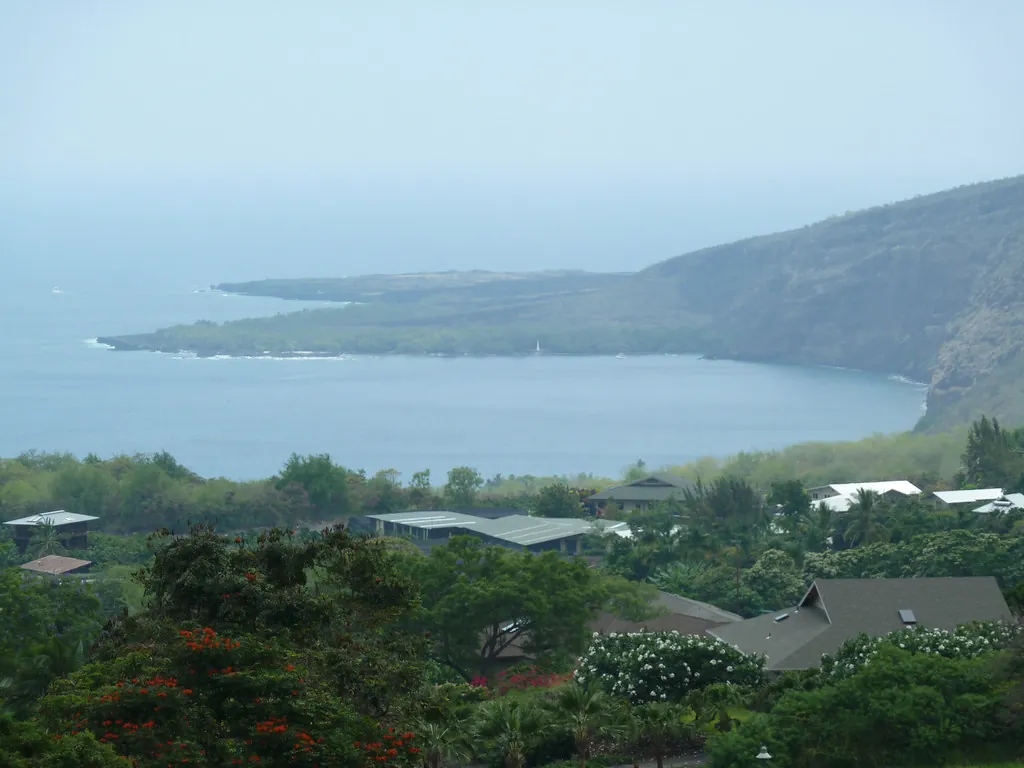
Stand at the railing for a minute without taking a photo. The bay has been a royal residence, a landing site and a grave, and it reads differently once you stop treating it as a backdrop.
If you want the history rather than the view, our Captain Cook and Hawaiian history piece covers the arrival, the death, and the Hawaiian perspective without the sensationalism. For what the water is actually like down there, the snorkelling and marine life hub is the place to look.
Food Stands, Fuel, and the Bits That Catch People Out
South Kona eats earlier than you’d expect. Plate lunch counters in Captain Cook close by 3:00 PM, and the good poke is gone before that. Super J’s in Captain Cook does laulau wrapped in taro leaf that will ruin other laulau for you, and the fruit stands on Route 11 near Kealakekua sell whatever came off the trees that morning. Cash is king at most of them.
- Fuel up before you go south. Fill the tank in Kailua-Kona or at the Captain Cook station. There is nothing useful between Captain Cook and Hōnaunau.
- Use the restrooms at Nāpōʻopoʻo Beach Park. They are the last proper facilities on the loop, and the roadside pull-offs have nothing at all.
- Carry water. Uphill walking in direct sun up here is no joke, and even the short wharf path will have you reaching for a bottle.
- Watch for Sunday closures. A few small Kealakekua shops shut entirely, and the church car parks fill with families.
- Don’t rely on mobile signal. Reception goes patchy on the lower stretches of Nāpōʻopoʻo Road and around Hōnaunau. Download your map before you leave town.
Extending the Loop to Hōnaunau
Carry on south for another twenty minutes and you reach Puʻuhonua o Hōnaunau National Historical Park (HO-nah-oo-now), a place of refuge with a Great Wall, a royal enclosure and some genuinely excellent interpretive signage. Entry runs $25 (~€23) per vehicle for a seven-day pass, and the National Park Service site lists current hours and any closures. This is where I’d spend the extra hour if the morning went to plan.
From there, Route 11 climbs back to Kailua-Kona in about forty minutes, or you can loop up through Nāpōʻopoʻo Road again for a second look at the bay as the light softens. Nine times out of ten I take the second option. The road is empty by then, the coffee is in the boot, and the whole slope smells faintly of roasting.
A Note on Timing Your Day
Build the morning around the bay crowds rather than against them. Hit the overlook before 9:00 or save it for after lunch, put the coffee farms in the crowded middle of the day where they belong, and you’ll never queue for anything longer than a flat white. If you only remember one thing, remember that: the bay sets the clock, and the coffee fills the gaps.
One last practical detail. Check the Kona weather and best-time guide before you set out, because a heavy rain band on the slope will flatten the view from every lanai on this route, and there is no point driving up for a photograph of cloud. The coffee still tastes good in the rain, mind.